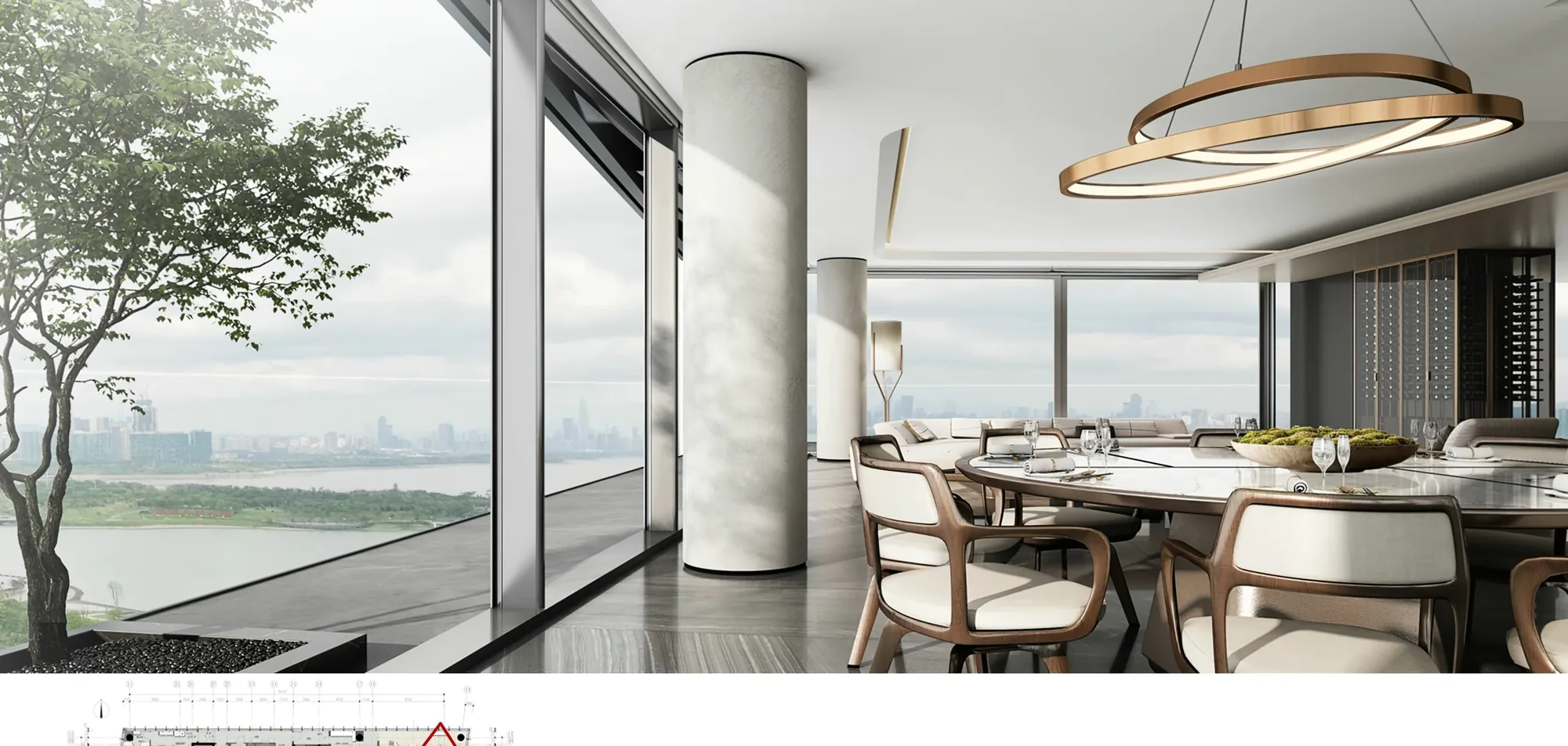

Interior Design in Shanghai: Commercial & Residential Innovation
Shanghai is a city of acceleration. It grows vertically and culturally at the same time, balancing global ambition with deeply rooted local identity. In this environment, interior design is no longer a decorative exercise—it is a strategic tool that shapes how people work, stay, dine, socialize, and live.
From Grade-A office towers in Lujiazui to lifestyle hotels in Jing’an, from fine-dining destinations along the Bund to high-density residential developments in Pudong, spatial design in Shanghai must operate at the intersection of efficiency, emotion, regulation, and aspiration. As an interior design company Shanghai, our firm approaches both commercial and residential interiors as ecosystems—designed to perform, adapt, and endure.
This article explores unique interior design ideas transforming commercial and residential spaces in Shanghai, grounded in the city’s real economic, cultural, and spatial realities.
Understanding How Shanghai Lives, Works, and Experiences Space
Shanghai’s urban density is among the highest in Asia. Mixed-use developments dominate the skyline, integrating retail, offices, hospitality, and residences within a single footprint. This density creates pressure on space efficiency while raising expectations for comfort, identity, and experience.
Key contextual drivers shaping interior design in Shanghai include:
-
Economic landscape: Finance, technology, advanced manufacturing, luxury retail, and hospitality are major growth sectors.
-
Work culture: High-performance, long-hour environments require offices that support wellbeing without sacrificing productivity.
-
Lifestyle patterns: Dining out, social visibility, and experiential consumption play central roles in urban life.
-
Residential reality: Apartments dominate, with limited square footage and increasing demand for multifunctional living.
-
Climate: Hot, humid summers and cold winters demand intelligent thermal and material strategies.
Interior design in Shanghai must respond to these forces with precision, not excess.
Designing Hotels that Reflect the Identity of Shanghai
Hospitality in Shanghai is intensely competitive. Hotels are no longer judged only on service, but on how well their interiors communicate story, locality, and operational intelligence.
Successful hotel interior design here focuses on:
Experiential Guest Journeys
From arrival to check-out, spatial sequencing matters. Lobby design balances openness with intimacy, while circulation supports intuitive navigation in high-traffic environments.
Cultural Storytelling Without Imitation
Rather than literal motifs, contemporary hotels reinterpret Shanghai’s heritage—Art Deco geometry, shikumen proportions, industrial textures—through modern materials and lighting.
Climate-Responsive Comfort
Material choices prioritize humidity resistance and thermal comfort, while layered lighting supports mood changes across seasons.
Operational Efficiency
Back-of-house layouts, service routes, and durable finishes ensure long-term performance in high-occupancy conditions.
Hotel interiors that succeed in Shanghai are not louder—they are smarter.
High-Performance Workplace Design in Shanghai
Shanghai’s workforce is young, global, and highly competitive. Offices must now function as performance platforms, not just desks and meeting rooms.
Key workplace strategies include:
Hybrid Spatial Flexibility
Designing for a mix of focus work, collaboration, and social interaction—without overbuilding fixed spaces.
Productivity-Driven Layouts
Zoning based on workflow analysis reduces friction, improves efficiency, and supports diverse team behaviors.
Wellbeing and ESG Integration
Daylight access, acoustic control, ergonomic furniture, and sustainable materials are no longer optional—they are expected.
Technology-Enabled Environments
Smart booking systems, collaboration tech, and adaptable infrastructure support rapid organizational change.
Office interior design in Shanghai must attract talent while supporting relentless business pace.
Creating Social Destinations Through Restaurant & Club House Design
Shanghai’s F&B and nightlife scene is globally recognized. Design plays a decisive role in differentiation, visibility, and repeat visits.
Effective restaurant and club house interiors focus on:
Atmosphere as Brand
Lighting, acoustics, and material contrast shape emotional response and social energy.
Zoning for Experience
Clear separation between arrival, dining, social, and private zones supports comfort without reducing vibrancy.
Social Media Visibility
Design elements become visual anchors—memorable but not gimmicky.
Luxury vs Accessibility
Some venues pursue exclusivity, others volume. Interior design must align spatial strategy with brand positioning.
In Shanghai, dining spaces are cultural stages—design determines how long guests stay and how often they return.
Designing Homes that Respond to the Way Shanghai Lives
Residential interiors in Shanghai are shaped by density, family structure, and evolving lifestyle needs.
Apartment-Centric Living
Smart storage, flexible layouts, and visual openness are critical in compact units.
Multi-Generational Considerations
Design balances privacy and shared space, accommodating different age groups under one roof.
Indoor-Outdoor Relationships
Balconies, window treatments, and natural light management enhance livability in high-rise environments.
Technology & Comfort
Smart home systems improve energy efficiency, security, and convenience.
As an interior design company Shanghai, our firm treats residential interiors as personal ecosystems—quietly supporting daily life.
Unique Interior Design Ideas We Implement
Rather than trends, these ideas are grounded in Shanghai’s realities:
-
Biophilic integration using low-maintenance greenery suited to urban living
-
Adaptive layouts that evolve with changing family or business needs
-
Layered lighting systems responding to time of day and season
-
Material contrast strategies balancing warmth and durability
-
Cultural-modern fusion without nostalgia or excess symbolism
-
Technology-enhanced spaces that remain intuitive, not intrusive
Each idea serves function first, emotion second, and longevity always.
Why Interior Design in Shanghai Requires Local Intelligence
Shanghai’s regulatory environment, construction standards, and supply chains are complex. Successful projects require:
-
Knowledge of building codes and approval processes
-
Understanding of local contractors and material availability
-
Sensitivity to cultural expectations and user behavior
-
Experience managing high-density construction logistics
This is why clients seek an interior design company Shanghai that is context-aware, not just design-driven.
Our Design Approach
Our firm follows a structured yet flexible methodology:
-
Research & Site Analysis – Understanding context, users, and constraints
-
Concept & Spatial Strategy – Defining purpose before form
-
Visualization & Detailing – Translating ideas into buildable clarity
-
Technical Coordination – Aligning design with execution realities
-
Project Control – Quality, timeline, and cost oversight
-
Final Styling & Handover – Ensuring spaces feel complete, not staged
Every decision is intentional, measured, and aligned with long-term value.
Transform Your Commercial or Residential Space in Shanghai
Shanghai rewards clarity, intelligence, and restraint. Whether designing a hotel, office, restaurant, or home, interior design must respond to how the city truly operates—not how it appears on the surface.
For those seeking spaces that perform, adapt, and endure within Shanghai’s demanding environment, strategic interior design is not an expense—it is infrastructure.
Connect with us in