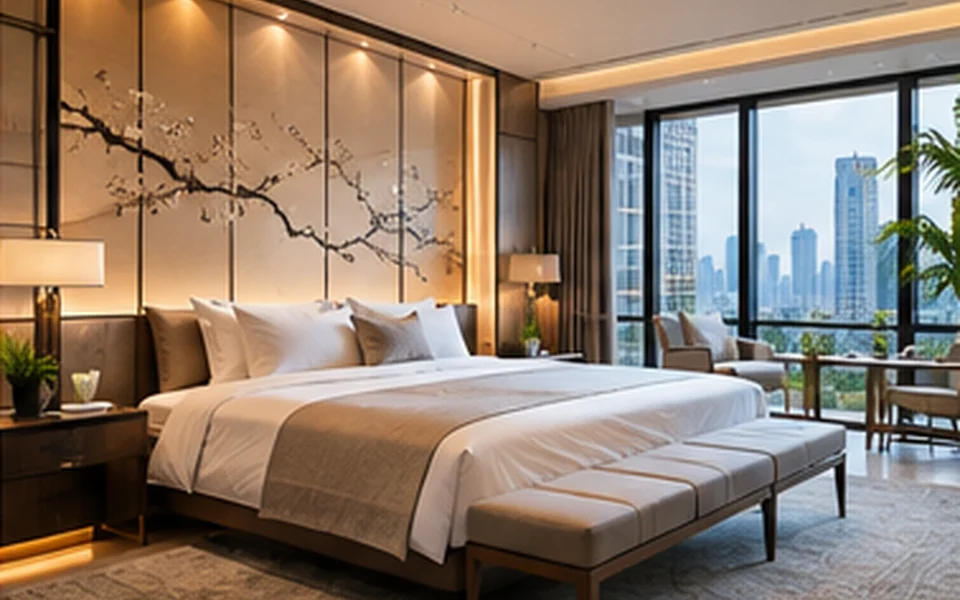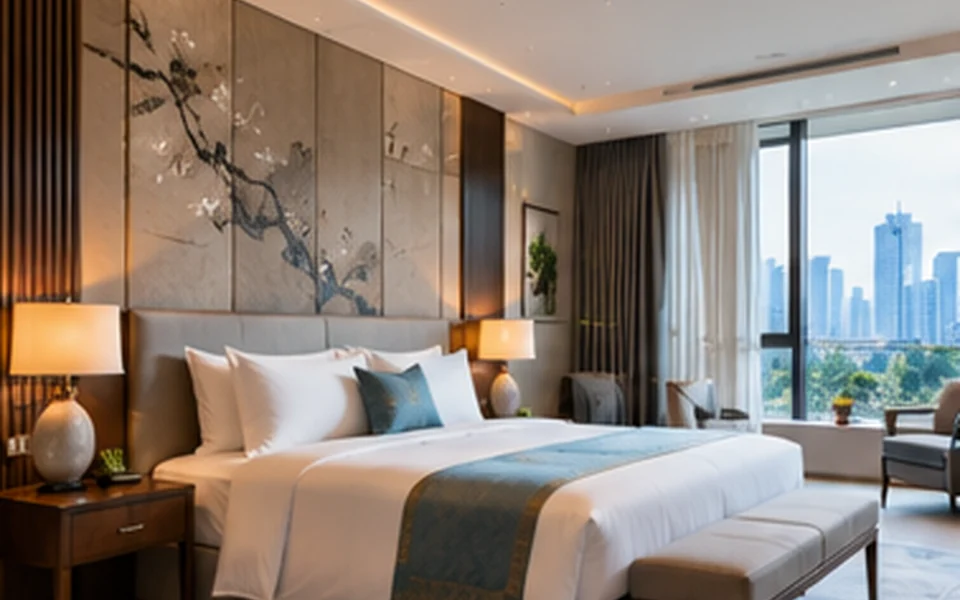
A successful hotel guestroom balances emotional comfort with operational efficiency. Hotel interior design companies in Shanghai need to consider how the room sleeps, how it works for different guests and how quickly staff can maintain it. Minor usability flaws become major costs when repeated across many keys.
Practical priorities for rooms guests use repeatedly and staff service every day.
Protect sleep quality
Pay attention to external and internal noise, room-to-room sound, blackout control, nighttime lighting and how guests operate the temperature controls. Bedding dimensions, bedside power and privacy matter as much as a striking headboard. Check these details in a realistic room mock-up.
Design around actual guest routines
Test luggage placement, hanging space, desk or work surface, charging points, mirror position and bathroom access. Watch for collisions between drawers, doors and furniture. Rooms should feel intuitive without requiring guests to decode complex switches or hidden storage.
Simplify housekeeping
Avoid unnecessary dust traps and fragile details where suitcases or cleaning equipment move. Specify stain-resistant or repairable finishes appropriate to their use. Give staff practical access to services and replaceable components without dismantling built-in furniture.
Control consistency across rooms
A prototype should establish a clear finish and construction standard. Record approved materials, joinery details and tolerances before mass procurement. Site supervision and sample-room reviews help reduce variation between the first completed room and the last.
A practical scenario
A beautiful bedside shelf has no convenient power socket. The problem seems small until repeated in 120 guestrooms. Reviewing everyday tasks in the mock-up would have exposed it.
This is an illustrative scenario, not a description of a completed SATU commission. The useful lesson is to connect the proposed design decision to people, the real condition of the site, the budget and the agreed approval process before work proceeds.
How to turn the guidance into a clear project decision
Make the next meeting specific. Bring a current plan or survey, explain the intended users and operating constraints, and ask the project team to distinguish confirmed conditions from assumptions. Use the points below as a shared agenda, then record who owns each action and its deadline. Where changes involve structure, mechanical services, fire protection or statutory matters, engage appropriately qualified professionals and confirm the site-specific requirements with the responsible authorities or building management.
Before approving procurement or construction, request the drawings and product information needed to verify the chosen solution. Compare alternatives against their intended use, installation lead time, replacement availability, cleaning requirements and effect on the approved programme. This disciplined approach lets design intent survive the move from attractive proposal to a working, maintainable interior.
Decision checklist
- Test a full-size guestroom before repetition
- Review sleep, lighting and acoustic comfort
- Study cleaning access and luggage movement
- Specify replaceable components and clear tolerances
Frequently asked questions
What matters most in a hotel guestroom?
Sleep quality, intuitive use, privacy and maintainability should guide the design.
Why build a mock-up room?
It allows design and operations teams to resolve repeated details before a full rollout.
Final perspective
The strongest result is not simply a convincing visual concept. It is a space that supports its occupants, responds to its building, and can be delivered and maintained with reasonable clarity. Bring these questions into your next design review in Shanghai and use the answers to build a more reliable brief.